Aniimo Combat Guide: Modes, Elements, Roles & Break
How Aniimo combat actually works: Command vs Twine Mode, why elements and Break matter, the five roles, and which 'numbers' are official versus reported from the beta.
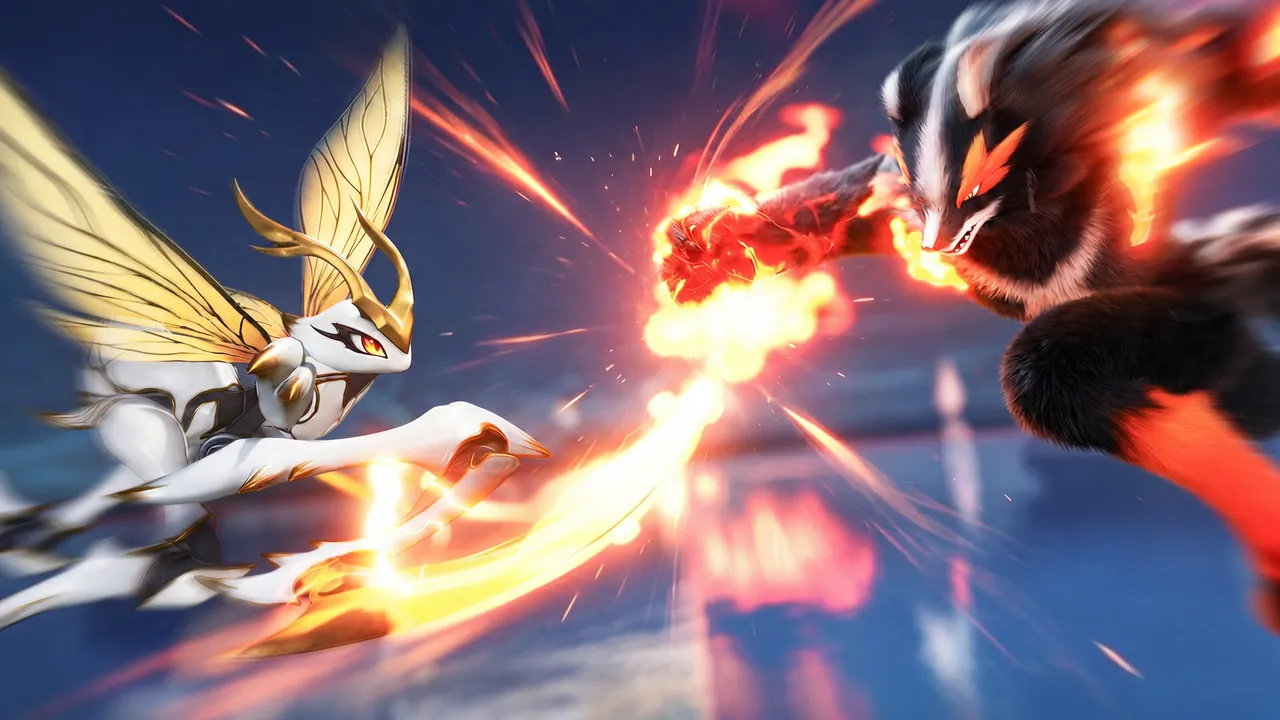
Aniimo’s combat is real-time, closer to an action RPG than a turn-based collector (Steam). This guide separates what’s straight from Pawprint from what’s reported by us and other beta testers and could still change. We label every “number” so you always know which is which.
Official · beta build = first-party data from the official wiki, but a current beta-build value that may be retuned before the Q3 2026 launch. Community = reported by players, not officially confirmed.
The two ways to fight
There are two combat modes, and you’ll swap between them constantly:
- Command Mode: “Strategically coordinate skills and direct your Aniimo in tactical battles.” You stay the Pathfinder and order your Aniimo around, trainer-style (Beta Survival Handbook).
- Twine Mode: “Transform into your Aniimo and unleash real-time combat with dynamic combos!” You become the creature and fight with its kit yourself (Beta Survival Handbook).
Casuals can win whole fights from Command Mode; if you want to push hard content, you’ll want to master Twine Mode. (Heads-up: the old “trainer mode” name some guides use isn’t the official term. It’s Command Mode.)

Elements decide your damage
Elements are central: a balanced roster gives you the type advantage in fights. The handbook literally tells you to “master fire, water, grass, lightning” and that “a well-balanced roster is key to gaining an advantage in Alpha battles” (Beta Survival Handbook). There are nine elements (Fire, Water, Grass, Lightning, Ice, Earth, Wind, Light, Dark), and some Aniimo are dual-typed: Somniwing is Wind + Grass on the official index (wiki.aniimo.com).
The handbook says elements give “an advantage” and that you can read matchups in-game, and that’s how the current beta build works: there are only three outcomes (super-effective, neutral, and resisted), with no immunities, so nothing ever deals zero damage. Skip the multiplier grids on fan wikis (at least one is visibly broken, with the Ice attacker row copy-pasted from the Earth row): our type chart mirrors the beta build’s real values, so read matchups there or in the in-game Type Matchup panel. These are current-build figures and may be retuned before launch.
The five roles
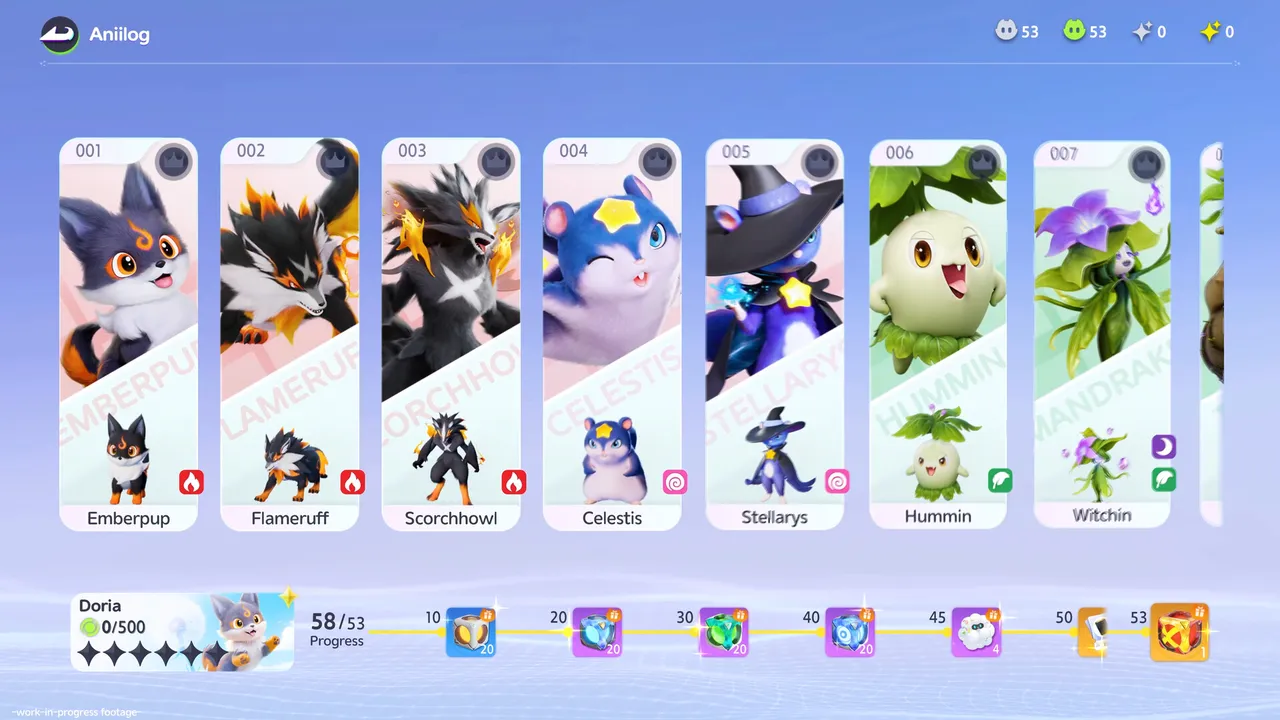
Every Aniimo has a combat role, shown as official filters in the Aniilog (wiki.aniimo.com):
- DPS: your damage core. Emberpup is a DPS.
- Break: cracks enemy poise to open damage windows (see below).
- Heal: keeps the team alive in long fights.
- Support: buffs and debuffs.
- Regen: grinds out sustain over time.
Our take (commentary, not an official rule): invest in a DPS first, then a Break to set it up, and add a Heal for tough content. Browse roles in the Aniilog filters, and see how they stack up on our tier list.
Break: the setup that wins fights
Break is a real mechanic: dealing Break damage in combat doesn’t just stagger an enemy. It also raises your capture chances (Beta Survival Handbook). So a Break Aniimo pulls double duty: it opens damage windows for your DPS and softens wild Aniimo up for the catch. (Full catching tactics live in the capture guide.)
Skills & stats: and which numbers to trust
Each Aniimo carries a handful of active skills (including a basic Attack), a couple of passive traits, and a Homeland skill, but the counts vary per creature, so don’t trust any “every Aniimo has N skills” claim. (Emberpup carries 4 skills and 2 traits; Somniwing carries 5 skills and 1 trait.) Combat runs on six stats: HP, BREAK, ATK, P.DEF, M.DEF, REGEN (wiki.aniimo.com); we break those down in the stats guide.
Per-skill numbers (power, cooldown) do appear on the official index, e.g. Emberpup’s Fire Kick at Power 72, 15 s cooldown Official · beta build (wiki.aniimo.com). They’re first-party, but they’re the current beta build’s balance values and can be retuned at launch, so treat them as directional, not gospel. Each creature’s Aniilog entry mirrors its official page.
Energy (EP): what’s actually documented
Skills run on EP (energy). Every active skill lists an EP Cost on its official index entry, so managing that pool is a real layer of Twine-Mode play. Some skills spend it in bursts: Somniwing’s Energy Orb is held to charge, consuming 10 EP every 0.6 s to scale its damage up to four times. EP capacity itself can grow, too. Somniwing’s Full Energy trait raises the whole team’s EP cap by 20 Official · beta build (wiki.aniimo.com).
Beyond the EP economy, the full Twine-Mode combo / ultimate flow (the “press R, then a team ultimate on Y” system you’ll see described on fan sites) isn’t documented in any official channel, and we couldn’t find a credible source for the exact inputs or numbers. The moment Pawprint publishes it, it goes here, with the receipts.
What’s official vs reported (so you’re never misled)
- Official: real-time combat; Command Mode & Twine Mode; nine elements (incl. Light) + dual-typing; the five roles; the Break-raises-capture mechanic; the six stats; the EP economy.
- Official · beta build (may be retuned): per-creature stat values, per-skill power/cooldown numbers, trait magnitudes, and the type chart’s effectiveness values, all first-party but current-build figures.
- Not published anywhere. We won’t print it: a “personality +X%” table or a documented “R / Y Team Ultimate” system. No official, or even credible community, source exists for these yet.
What to read next
- Capture guide: how to actually catch what you’ve Broken.
- Stats explained: what HP/BREAK/ATK/P.DEF/M.DEF/REGEN really do.
- Type chart: the elements, honest about what’s confirmed.